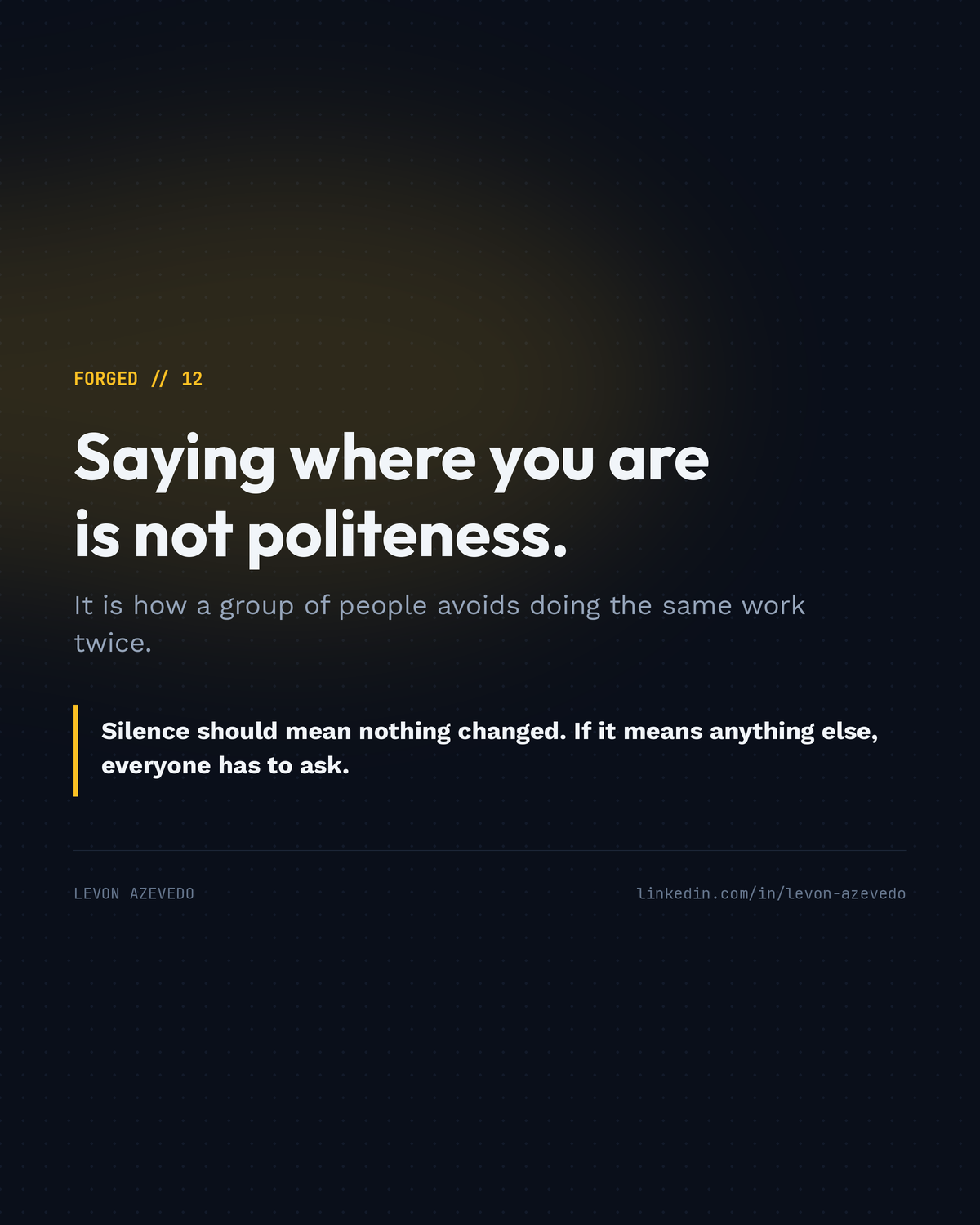
Saying where you are helps people avoid doing the same work twice. The useful information is often a change of state: someone has taken ownership, found a dependency or finished a handoff.
A percentage does not tell a colleague whether they should act. “I have this; it is blocked on the supplier’s answer; please do not start a second implementation” gives them something they can use.
Write that information where the next person can find it. A status update that lives only in one person’s head leaves everyone else working from an older picture of the project. Even capable people can duplicate work when both versions look reasonable.
Treat the update as a contribution to shared memory. Say what changed, who owns the next action and what evidence would allow it to proceed. That is more useful than a report polished for a senior audience.
The same principle matters when software agents work on shared files. Ownership and state have to be visible before another worker acts. An intention to finish is different from a recorded delivery that someone else can inspect.
The question for a team is practical: where does the current state live, and can the person who needs it read it without first asking its owner?